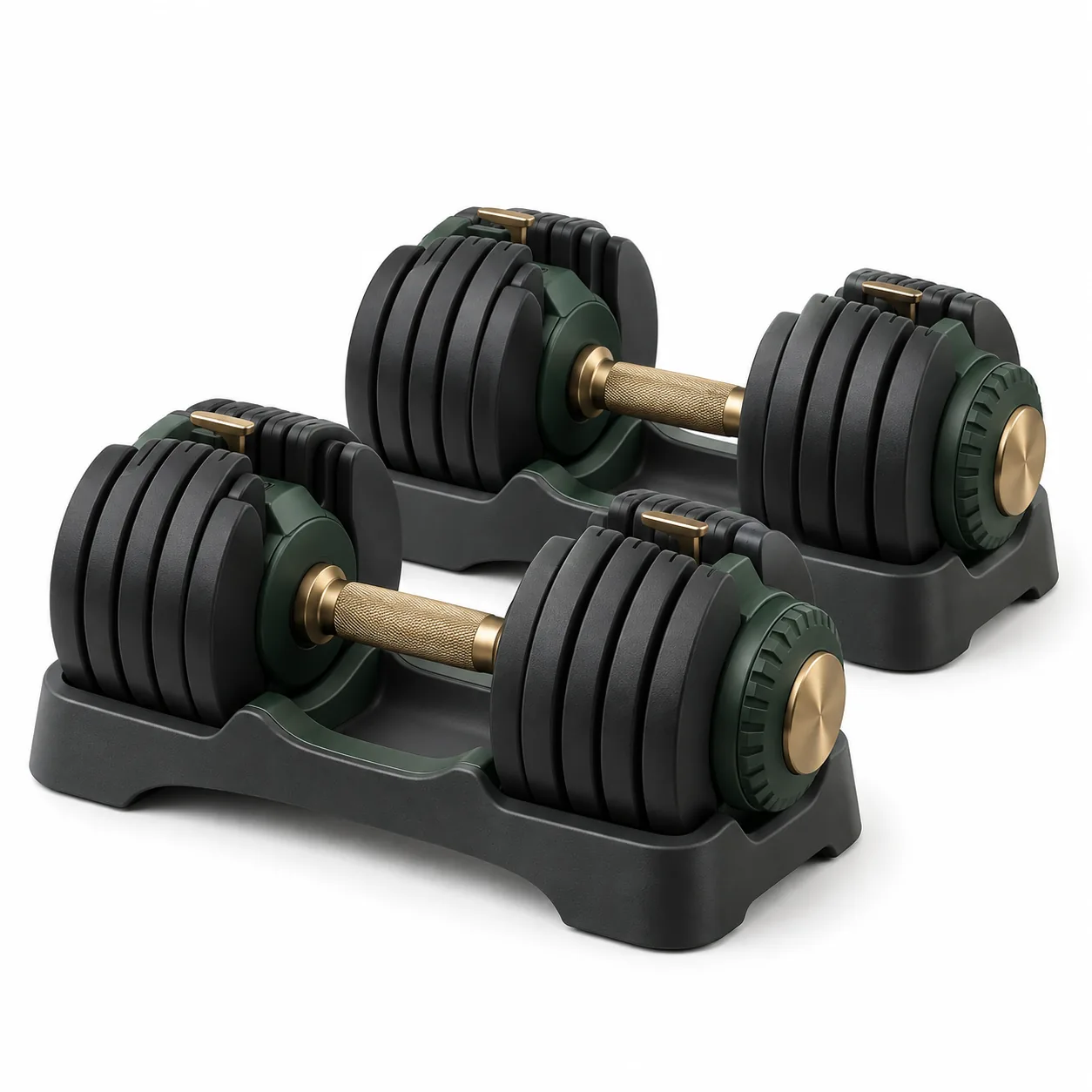
Adjustable Dumbbells
Read More
How to compare adjustable dumbbells
Adjustable dumbbells put several selectable loads into one pair or handle system, but the changing method, usable range and storage arrangement vary widely. Begin with the room and movements you already have in mind. Measure the available floor or shelf space, decide where load changes will happen, and then compare those practical requirements with the exact dimensions and instructions in each listing.
Understand what the stated weight covers
A prominent weight figure may refer to one dumbbell, the combined weight of a pair, the heaviest selectable setting or the total weight of handles and loose plates. Read the quantity, package contents and specification together. If a pair is pictured, confirm that the listing actually supplies two complete dumbbells. If the seller lists a range, check whether both ends of that range apply to each hand.
Also confirm whether handle, collars, cradle or unused plates are included in the quoted weight. This matters when comparing a selector set with a plate-loaded kit: two listings can show the same large number while describing different package totals. Record the per-hand minimum and maximum in your shortlist rather than relying on the headline alone.
Compare the adjustment mechanisms
Dial designs usually change the selected load while the dumbbell rests fully in its base. Selector-pin systems use a movable pin, lever or slide to choose plates in a cradle. Check whether there is one control or a control at each end and whether the marker can be read from the position where the set will stand. The maker's photographs should show how the plates remain in the base when they are not selected.
Spin-lock handles use threaded collars and separate plates. Look for the thread length, collar shape and the order in which plates are loaded. Other plate-loaded handles use clips or locking collars on a smooth sleeve. These formats need a clear surface for loose parts, and a change may involve handling several plates. Confirm every loading step in the manual rather than assuming two systems with similar photographs work alike.
Read every increment, not just the range
The gap between settings determines the choices available between the lightest and heaviest loads. Some sets use an even sequence; others have larger jumps at part of the range. Write down the full stated sequence where it is provided. If the listing shows only a minimum, maximum and number of settings, do not assume that the gaps are equal.
Check whether intermediate settings require adjustment at both ends. With loose plates, ask whether the available plate combinations keep the two ends balanced and whether fractional changes require extra plates sold separately. A clear comparison lists the actual selectable steps, not only the number of advertised settings.
Measure the dumbbell and the changing area
Record overall length, plate or head width, handle length and maximum diameter. Some selector dumbbells stay the same length at every setting. Some adjustable systems become shorter when fewer plates are selected. Compare the dimension at the settings you expect to select and allow clearance beside a bench, rack and nearby furniture.
The base needs enough room for the dumbbell to enter and leave without catching a wall. Measure the tray or cradle itself, then include space for your hands to reach a dial or selector. For spin-lock and plate-loaded kits, plan a level place for plates and collars during changes. Keep these parts out of walkways and confirm whether a storage tray, rack or stand is included or shown only for context.
Check handle length, diameter and grip
Usable grip length is different from the full handle length. Look for the distance between the inner plates or heads, especially if the product has wide selector housings. Listings may describe knurling, rubber, foam or a moulded texture; close photographs can show where that surface starts and ends. Compare the stated diameter with handles you already find comfortable where that information is available.
Do not infer grip size from a staged photograph. Camera angle and hand size can make the same handle look different. If wrist straps, hooks or other accessories are part of your setup, check their own compatibility and instructions against the usable grip area.
Review cradles, stands and plate compatibility
A cradle may be essential to the adjustment process rather than an optional storage accessory. Confirm whether each dumbbell has its own base, whether a pair shares one stand and whether the controls can operate unless every plate is seated correctly. If a stand is offered, check its assembled footprint, height, stated load limit and whether it is part of the selected package.
For separate-plate systems, match the maker's stated sleeve or hole diameter, collar type and permitted loading order. Terms such as standard and Olympic are not enough on their own; use the dimensions in the listing and manual. Do not add plates from another set unless the manufacturer states that the size and locking method are compatible.
Inspect materials, contact points and upkeep
Listings may identify metal plates, coated plates, moulded selectors or padded cradles. Look closely at the plate edges, locking points, handle and base. If protecting the floor matters in your room, compare the stated materials and plan a suitable stable surface. Follow the maker's cleaning guidance because oils, sprays or solvents can affect different finishes and plastics in different ways.
Before each use, follow the supplied procedure for seating the handle, choosing the load and confirming that the selected plates are engaged. Keep adjustment tracks, threads and collars clear of loose material. If a selector does not move as described, a collar loosens, a plate is damaged or the handle no longer seats properly, stop using the set and consult the manufacturer or retailer.
Match the exact variation and model code
A single retail page can offer several weight ranges, quantities or generations of the same family. Changing a variation may alter the handle, base, included plates or adjustment steps while leaving much of the page description unchanged. Record the exact option name and model code shown for the selection you are comparing. Then check that the specifications, package contents, manual and photographs all refer to that same selection.
Colour names are not reliable model identifiers, and a photograph of a pair does not settle the supplied quantity. If the model code is missing or two parts of the listing disagree, ask the seller or manufacturer for clarification. Save the answer with your shortlist so you do not accidentally compare details from two different versions.
Consider the packaged set and route into the room
The assembled footprint is only one part of planning. Check the number of cartons, packaged dimensions and packaged weight where the seller supplies them, especially if the equipment must pass through a narrow doorway or travel upstairs. Confirm whether the bases, stand or extra plates arrive in separate boxes and whether assembly is required.
Packaging information can also help distinguish a single dumbbell from a pair, but use the written quantity as the deciding evidence. Before ordering, review the seller's current delivery, return and damaged-item process for heavy goods. These terms belong to the exact seller and listing and may differ even when the equipment name looks the same.
Questions to answer from each listing
- Does the stated weight apply to one dumbbell, a pair or the complete package?
- What are the minimum, maximum and all intermediate settings per hand?
- Does the overall length change with the selected load?
- What are the usable grip length, handle diameter and dumbbell dimensions?
- Are two handles, all required plates, collars and separate cradles included?
- Is a pictured stand included, optional or sold by another seller?
- Which plate diameter and locking parts does the maker state are compatible?
- How much clear space is needed to remove the dumbbell and reach its controls?
- What inspection, cleaning, storage and warranty instructions are supplied?


