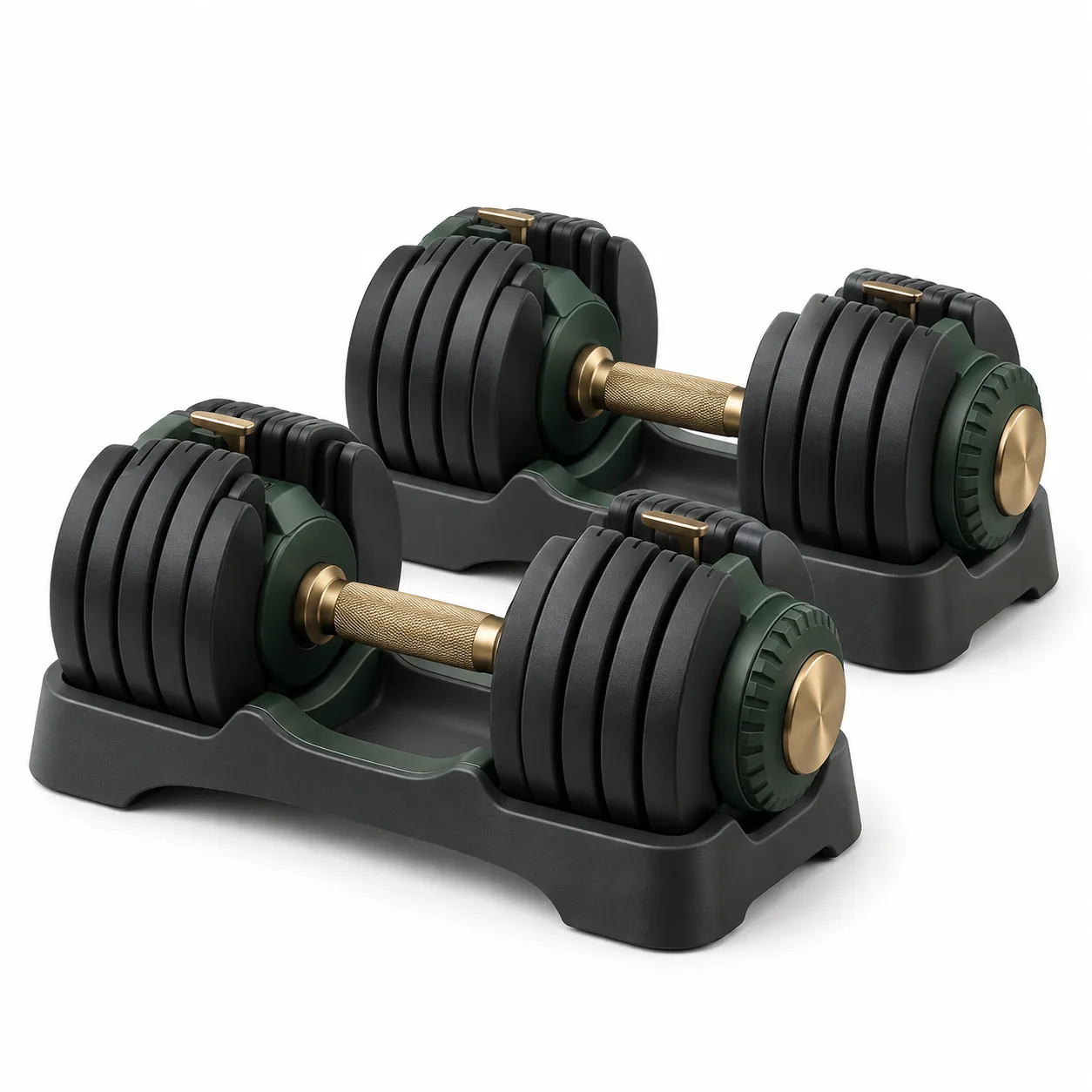
Build a useful adjustable-dumbbell shortlist
The best adjustable dumbbell for a particular room is the one whose loading method, dimensions and selectable steps fit the planned setup. Start with requirements you can verify: the lightest and heaviest load needed per hand, the changes between them, the storage position and the time and space available for changing plates. Keep those notes beside the listings so attractive photographs do not replace practical comparison.
Write the required load sequence per hand
List the settings you expect to use rather than starting with the largest advertised number. A product may cover the endpoints but skip an intermediate load that matters to your plan. Copy the manufacturer's complete sequence where it is supplied and mark whether the adjustment is made once, at both ends or by adding plates manually.
Check the unit and basis of every figure. One page may quote kilograms for each dumbbell, another may give pounds, and another may use the combined package weight. Convert figures consistently for your own comparison, but retain the original values so you can check the calculation. Never divide a pair total unless the listing clearly says the load is shared equally.
Choose a changeover process that fits the space
For a dial or selector model, look at the full sequence shown in the manual: returning the handle to the base, aligning the parts, moving the control and lifting the selected plates free. The cradle should stand on the surface described by the manufacturer with enough clearance to reach every control. A shelf that fits the base may still be awkward if a dial faces a wall.
For threaded handles, count the parts that must be moved for a typical change. Plates and collars need a stable temporary position, and the loading order may need to be repeated at both ends. Clip-collar or smooth-sleeve designs have a different locking procedure. Compare the real series of actions rather than relying on descriptions such as quick or simple.
Check whether the dumbbell changes length
Fixed-length selector models can project beyond the hand even at a lighter setting. Removing plates from a fixed bar does not shorten its sleeves or collars; other systems may change overall length with the selected load. Find the stated maximum dimensions and, where available, dimensions at lower settings. Measure the clear space beside the bench and along the intended storage route.
Also note the shape of the outer heads. Flat-ended or block-like forms may rest differently from round plates, while protruding selectors can affect how a dumbbell is placed back into its cradle. Treat these as handling and storage observations rather than performance claims, and follow the supplied guidance on where the equipment may be set down.
Compare the usable handle area
The specification may state overall handle length while only part of it is available for the hand. Look for a separate grip-length measurement and inspect straight-on photographs for the inner boundaries. Compare handle diameter and the position of any centre bulge, taper or selector housing. Grip descriptions such as knurled, textured or padded should be confirmed for the exact configuration.
If you intend to use gloves, straps or hooks, consult their instructions as well as the dumbbell maker's guidance. A compatible diameter alone does not show that an accessory can sit clear of a dial, collar or plate. Do not assume an accessory pictured beside a set is included.
Separate the dumbbells from their storage system
Record the dimensions of one dumbbell, one cradle, the pair of bases and any stand separately. A stand can place the controls at a convenient height and organise spare parts, but it also adds a permanent footprint. Check whether the stand is included with the selected option, which bases it accepts and the stated load limit. If no stand is supplied, use only a stable surface that follows the equipment instructions.
Selector bases must usually retain the unchosen plates in the correct order. Look for guidance on relocating a loaded base and whether plates need to be removed first. For loose-plate kits, include the space required by every unused plate and collar. A tidy product photograph may omit the area those parts occupy during a change.
Verify plate, sleeve and collar compatibility
Extra plates can be useful only when the handle is designed to accept them. Compare the stated hole diameter, sleeve length, collar design and maximum permitted loading. Similar-looking plates are not evidence of compatibility. Some systems use proprietary plates or interlocking shapes that work only with a named handle and base.
With threaded handles, check that the collars match the thread and that the maker states how much thread must remain engaged. With smooth sleeves, identify the supplied locking collar and follow its inspection procedure. If the listing does not provide these details, ask the seller or manufacturer before planning an expansion.
Read the package contents and delivery details
Use the selected variation, not only the page title, to confirm quantity. The box may contain one adjustable dumbbell, a pair, handles with a partial plate set, or a complete kit with bases. Check whether assembly is required, how many cartons are listed and whether the stand arrives separately. Retain the supplied manual and identify the maker's support and warranty route.
On arrival, compare the parts with the inventory before use. Follow the assembly sequence, confirm selectors or collars operate as described, and do not improvise with a missing or damaged component. Packaging photographs are useful for identification, but the written contents list should decide what the order includes.
Plan routine checks and care
Read the inspection section of the manual before setting a maintenance routine. Selector tracks, pins, dials, threads, collars and plate edges may require different checks. Keep the adjustment area clean and dry as directed, and use only cleaning products the maker permits. Avoid adding lubricant unless the instructions identify the product and application point.
Before a session, examine the parts named in the manual and confirm the chosen load is locked at both ends where applicable. Return selector dumbbells squarely to their correct bases. Store loose plates so they cannot roll into a walkway. Stop and seek guidance if a control sticks, a collar will not remain engaged, a plate is cracked or the set behaves differently from the documented process.
Check returns, replacement parts and warranty scope
Read the seller's current return terms for the selected item, including any process for large or heavy parcels. Check the manufacturer's warranty document for its duration, excluded parts and required proof of purchase rather than relying on a short promotional label. A retailer return period and a maker's warranty are separate arrangements.
Look for an identified route to obtain a manual, replacement collars, selectors, plates or bases for the exact model code. Availability can change, so treat the listing as evidence only for what it states now. Keep the order record, model identifier and photographs of the delivered parts together in case a missing or damaged component needs to be reported.
Use a consistent final comparison
- Which exact settings are selectable for each hand?
- How is the load changed, and must both ends be adjusted?
- What are the maximum dimensions and the usable grip measurements?
- How large are the two bases, loose-plate area or complete stand?
- Does the chosen package contain one dumbbell or a pair?
- Are every required plate, collar, cradle and assembly part included?
- Does the manufacturer permit other plates or accessories?
- What checks are required before use and during storage?
- Where are the manual, parts support and warranty terms provided?